

Liability Definition, Working, Types, Examples, Liabilities vs Assets and Expenses

Like assets, liabilities may be classified as either current or non-current. Company assets come from 2 major sources – borrowings from lenders or creditors, and contributions by the owners. Liabilities are economic obligations or payables of the business. Accrued liabilities only exist when using an accrual method of accounting.

How Do Accrued Liabilities Work for a Company?
- A unique type of Expense account, Depreciation Expense, is used when purchasing Fixed Assets.
- If the service period and payment occur within a span of 12 months, then the accrued liability is classified as short-term.
- A high level of liabilities compared to assets can indicate increased financial risk, while a healthy balance suggests financial stability.
- Liabilities are best described as debts that don’t directly generate revenue, though they share a close relationship.
- These costs are subtracted from the business’s revenue to calculate net income, which is a key indicator of the company’s performance.
If Liabilities are too high, the business may face financial stress. Say you choose to use funds from your business to purchase the leased vehicle at the end of the lease term. By using your business funds, you do not have to take out an auto loan. Let’s say you decide to purchase the leased vehicle when the lease term is up. You need https://comprenowhats.com.br/arezzobalneario/2021/06/04/what-are-retainer-fees-for-lawyers/ to take out an auto loan to finance the purchase of the car. The article “expense vs liability” looks at meaning of and differences between two of these components – expense and liability.
Return on Equity (ROE) – Meaning, Calculation, Difference With ROCE And ROI, And More
- Put differently, an expense measures usage (it reduces net income right away), while a liability measures an obligation (it stays on the balance sheet until you pay).
- It’s important for assessing the financial health and risk level of a business.
- Use Tickertape Stock Screener which helps you find the assets, liabilities and more about a company.
- Both expense and liability result in cash outflows and are well-known to be similar.
- In this example, your company has total assets of $150,000 and total liabilities of $70,000.
- To master the art of financial wizardry, companies must accurately recognize and measure their expenses.
Liabilities are listed on your company’s balance sheet and directly impact your business’s assets and equity. There are several types of liabilities, and understanding each one is essential for assessing your business’s financial health and managing future cash flow. A liability is an obligation or debt a business must pay in the future. It can arise from loans, services received but not paid for, or any other financial obligation. Liabilities are essential for understanding a company’s financial health and future cash flow needs. Because the company actually incurred 12 months’ worth of salary expenses, an adjusting journal entry is recorded at the end of the accounting period for the last month’s expense.
Cash flow statements: how to prepare & example
Liabilities are carried at cost, not market value, like most assets. They can be listed in order of preference under generally accepted accounting principle (GAAP) rules as long as they’re categorized. The AT&T example has a relatively high debt level under current liabilities.
Company Overview
When the loan is ultimately paid back, the liability account will be extinguished from the books. Maybe it’s because you bought them a drink or did a favor for them. Your friend is probably not keeping track of the favors they owe you, at least not on paper, but you’ll remember that they have a liability to return your favor.
While assets represent what an entity owns, liabilities represent what it owes. The relationship between assets and liabilities is fundamental in determining an entity’s net worth. The goal is to have more assets than liabilities, ensuring a positive net worth and financial stability. The balance sheet is one of three financial statements that explain your company’s performance. Review your balance sheet each month, and use the analytical tools to assess the financial position of your small business. Using the balance sheet data can help you make better decisions and increase profits.
Contingent liabilities occur as a result of uncertain future events. Businesses track contingent liability using accounting software. Both of these mean that a business liabilities vs expenses examples needs to pay its supplier, but each happens at different times and in different ways. Accrued expenses mean when a company uses something, like its materials, but hasn’t gotten a bill yet. Like revenue accounts, expense accounts are temporary accounts that collect data for one accounting period and are reset to zero at the beginning of the next accounting period. There are times when company owners must invest their own money into the company.
Example: same cost, different outcomes
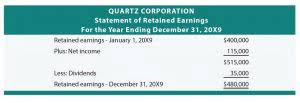
Instead, they reflect the company’s financial obligations and its ability to meet those Travel Agency Accounting obligations in the future. Liabilities are typically measured in monetary terms and are reported on the balance sheet, providing stakeholders with information about a company’s financial health and solvency. Liabilities and expenses both influence your business’s financial health but in different ways. Since liabilities aren’t part of the income statement, they don’t directly impact profit—but they do affect equity and assets. On the other hand, expenses directly affect profits—especially when operating costs increase. Expenses are recorded on the income statement, directly affecting net income and, subsequently, retained earnings on the balance sheet.

Leave a Reply